La pizzeria
The art of the Neapolitan pie
Four ingredients, two days of waiting and one very hot oven. Here is how we make our pizza, and why we bother.
A short history of a simple food
Flatbreads have been baked around the Bay of Naples since antiquity, but pizza as we know it took shape in the city's crowded streets in the eighteenth and nineteenth centuries. It was cheap, fast food for working people: dough topped with whatever was to hand, sold from street stalls and folded to eat on the move. Tomatoes, which arrived from the Americas and were slowly accepted in southern Italian kitchens, eventually became the defining topping. The Margherita — red tomato, white mozzarella and green basil — is said to have been named in honour of a visiting queen in the late 1800s, and whether or not the story is true, it remains the purest test of a pizzaiolo's skill.
Today, the craft of the Neapolitan pizza maker is recognised by UNESCO as part of the world's intangible cultural heritage. The rules are surprisingly strict, and we follow them closely while allowing ourselves a few Florida liberties.
The dough
We use soft Italian “00” flour, cold water, sea salt and a tiny amount of fresh yeast. The dough is mixed slowly, rested in bulk, then divided into balls of around 250 grams and left to mature for at least forty-eight hours. During that time, enzymes break down some of the starches and proteins, which gives the crust more flavour and a lighter, more digestible texture. A rushed dough tastes flat and sits heavy; you can tell the difference from the first bite.
The fire
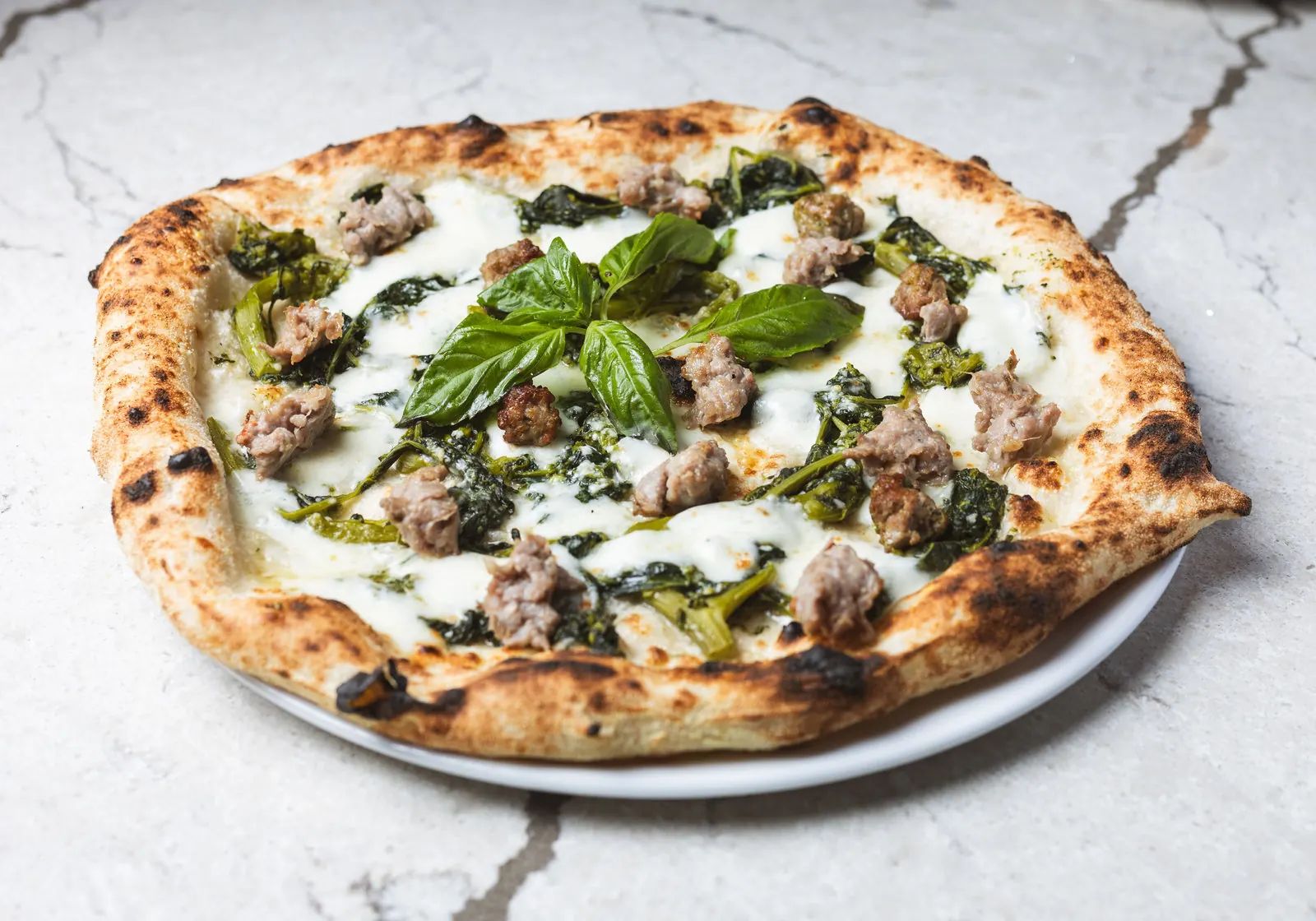
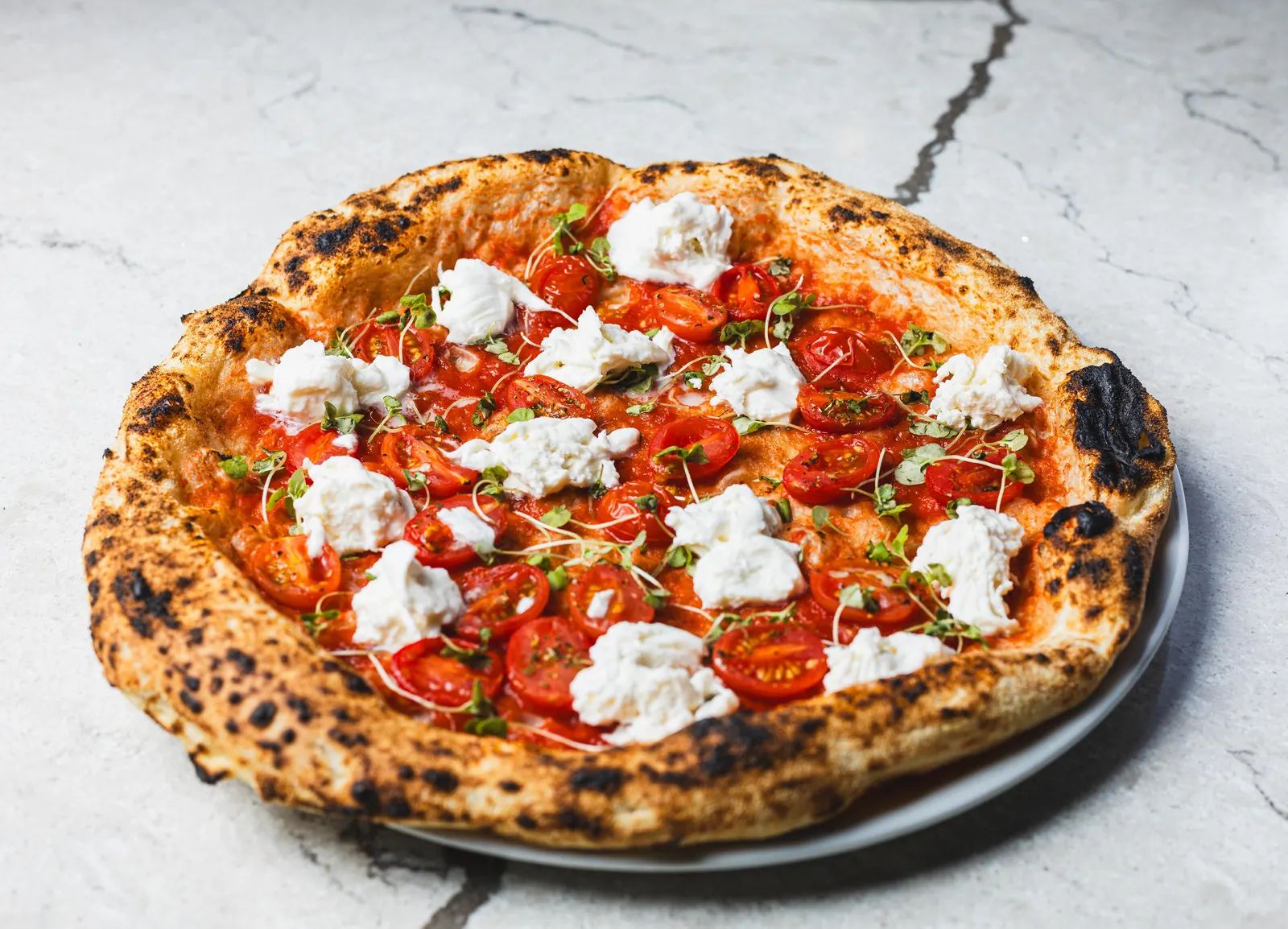
Our dome oven burns seasoned hardwood and runs at roughly 850°F on the floor. At that temperature a pizza bakes in about ninety seconds. The pizzaiolo turns it constantly with a small round peel so that the rim puffs evenly and develops dark, blistered spots — the “leopard” pattern — while the centre stays tender. A true Neapolitan pizza is soft enough to fold into quarters, which is exactly how many people in Naples eat it.
The toppings
Less is more. We use San Marzano tomatoes, crushed by hand and seasoned only with salt; fior di latte or buffalo mozzarella; Parmigiano aged at least two years; fresh basil; and extra-virgin olive oil added after baking. Our bianche skip the tomato in favour of smoked provola, broccoli rabe, porcini or a whisper of truffle. Toppings go on sparingly so the crust can still rise and the flavours stay clear.
Roman, Neapolitan and everything between
Neapolitan pizza is not the only Italian style we love. Roman pizza is thinner and crisper, baked a little longer at a lower heat, and on some evenings we serve a Roman-style special alongside our regular menu. We also make montanara, rounds of dough briefly fried and then topped, and panuozzo, a pizza-dough sandwich baked in the oven and stuffed while still hot.
Pizza at home
Every pizza on our menu is available to take away, and on weekday afternoons we run small, hands-on pizza classes at the counter for groups of up to eight. You will stretch your own dough, learn to load a peel, and leave with a dough ball and a full stomach. Ask us about upcoming dates on the events page.